
Dried flowers for wedding work went from niche to everywhere in about five years, and the marketing has run well ahead of the practical detail. Some dried materials are extraordinary. Some shed relentlessly, fade to nothing in Sydney sun, and cost more than the fresh equivalent.
This is the workroom version: what performs, what does not, what it really costs, and how to combine dried with fresh so the result looks intentional rather than thrifty.
Why Couples Choose Dried
The reasons are good ones, and worth being clear about because they determine which materials suit you.
- It keeps. A dried bouquet survives the wedding and sits on a shelf for years. Fresh flowers are a one-day proposition.
- It can be made early. Dried work can be built weeks ahead, which removes enormous pressure from the final week.
- It survives heat. A Sydney February ceremony at 34 degrees destroys fresh bouquets. Dried material does not care.
- Travel and transport are easy. No water, no cool room, no wilting in a hot car between the ceremony and the reception.
- The aesthetic. Muted, textural, slightly wild. It suits certain venues and dress styles extremely well.
The reasons against are equally real, and less often mentioned.
- It is not cheaper. Good dried material, especially preserved and bleached lines, is often more expensive per stem than fresh seasonal flowers.
- It sheds. Some materials drop constantly, which matters on a dark dress or a light-coloured venue floor.
- It fades. Sydney UV is brutal. Dyed dried material in direct sun bleaches noticeably within months.
- It can look dusty if the palette goes too far into beige. Dried work needs deliberate contrast to stay alive.
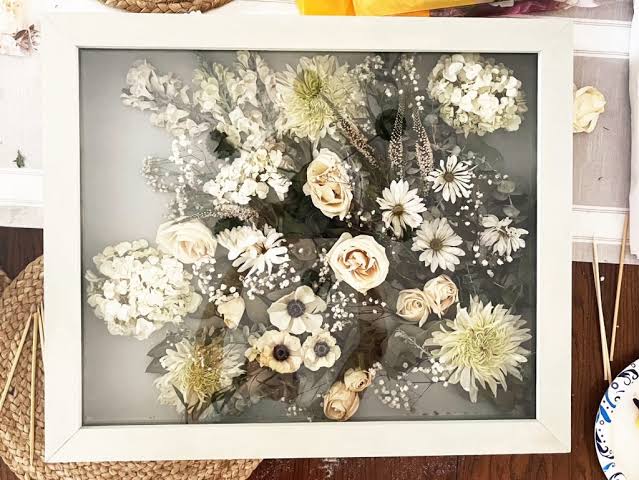
What Performs Well
Excellent, minimal shedding, holds colour:
- Preserved eucalyptus – glycerine-preserved gum stays soft and flexible, holds colour for years, and is the single most useful dried material for Australian weddings.
- Banksia – dries beautifully, structural, essentially indestructible. A dried banksia head lasts decades.
- Protea and leucadendron – dry to a lovely muted tone and hold their shape completely.
- Bleached and preserved ruscus – clean, structural, very little drop.
- Strawflower (helichrysum) – retains genuine colour, holds up well, and reads as a flower rather than a texture.
- Statice and limonium – reliable, cheap, holds colour, good filler.
- Craspedia (billy buttons) – perfect little spheres, no shedding, strong yellow that survives.
- Wheat, oats and barley – warm, textural, and inexpensive.
Handle with caution:
- Pampas grass – the signature of the trend and the worst offender for shedding. It drops constantly and is banned outright by a surprising number of venues. Hairspray helps a little; it does not solve it.
- Bunny tails (lagurus) – charming, and they shed.
- Dried hydrangea – beautiful and extremely brittle. It shatters if knocked.
- Dyed and painted lines – the vivid pinks and blues fade fastest and can look synthetic in daylight photography.
- Dried rose – shrinks considerably and goes brittle. Better preserved than air-dried.
The Combination Approach
The best results are almost never fully dried. They are dried structure with fresh focal flowers.
The reasoning is straightforward. Dried material provides texture, shape and permanence cheaply and early. Fresh flowers provide the luminosity that dried material cannot fake – the way light passes through a petal. A bouquet of preserved eucalyptus, banksia and bleached ruscus with six fresh garden roses added on the morning looks alive, costs less than fully fresh, and can be 80% built a fortnight ahead.
This approach also solves the fading problem for ceremony installations. Build the dried framework, add fresh on the day where people will look closely.
Where Each Works Best
Fully dried: bridesmaid bouquets, buttonholes, cake flowers, hanging installations, aisle markers, table runners, anything you want to keep.
Dried plus fresh: bridal bouquet, arbour and arch work, top table, entry arrangements.
Fresh only: anything with fragrance as part of the point, and any palette that needs true white. Dried whites read as cream or ivory, never white.
Cost, Honestly
The assumption that dried flowers for wedding work saves money is often wrong.
Dried is cheaper when: you are using Australian natives and grasses, you are building well ahead so labour is spread out, and you are avoiding imported preserved lines.
Dried costs more when: you want preserved roses or hydrangea, you want specific dyed colours, or you want volume. Dried material is sold by the bunch and priced on scarcity, and imported preserved lines carry freight and processing costs that fresh seasonal Australian stems do not.
A realistic comparison for a Sydney wedding: a fully dried bridal bouquet using good preserved material typically lands in a similar range to a generous fresh seasonal bouquet. What you actually buy with dried is permanence and heat resistance, not savings.
Where dried genuinely saves is installations. A dried arbour piece can be built once, transported easily, and reused for the reception. A fresh one cannot.
Sourcing and Sustainability
Worth knowing where dried native material comes from, because much of it is harvested rather than farmed.
NSW regulates the commercial harvest of protected native plants used in the cut flower and dried flower trade through a licensing system. Anyone picking or growing protected species commercially needs the appropriate licence, and the rules distinguish between wild-harvested and cultivated material. The framework for cut-flower licences and protected native plants sets out which species require tags and which require grower licences. Waratah and flannel flower, both popular in dried work, sit in the most tightly controlled groups.
If sustainability matters to you, ask your florist whether native dried material is cultivated or wild-harvested and whether it carries the relevant tags. A good supplier knows.
The underlying horticulture is also well studied. Australian research into Australian native cut flower species and their postharvest behaviour explains why some natives dry so successfully – the same structural robustness that gives banksia and protea long vase life fresh is what makes them near-permanent dried.
What Sydney Venues Allow
Check before you design. This changes plans more than any other factor.
Pampas grass is banned at a significant number of Sydney venues because of shedding and, in some cases, fire regulations. Ask specifically.
Open flame near dried material is a genuine fire risk and most venues prohibit the combination. If you want candles, keep dried arrangements well clear or use LED.
Council parks and reserves have their own conditions on what may be pegged, fixed, installed or left behind. If your ceremony is in a reserve, the relevant parks and venue hire conditions will tell you what is permitted before you commit to an arbour design.
Confetti and loose material from dried arrangements counts as litter in most venue contracts. Shedding material can attract a cleaning fee.
Care, Before and After
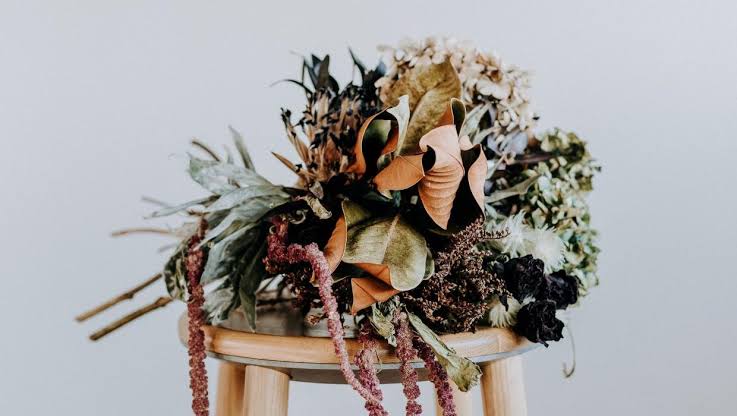
Before the day: store dried work in a dry, dark place. Humidity is the enemy – Sydney summer humidity can make dried material go limp and, in bad cases, mould. Keep it out of bathrooms and unventilated garages.
On the day: a light hairspray on shedding material helps. Do it outdoors, lightly, and well in advance.
Afterwards: keep it out of direct sunlight. This is the single biggest factor in how long the colour holds. Dust with a hairdryer on cool, low. Do not attempt to wash it.
Questions Worth Asking Your Florist
- Which of these materials shed, and how much?
- Is the native material cultivated or wild-harvested, and is it licensed?
- Which parts are dyed, and how fast will they fade in Sydney sun? 4. Can we build the dried structure early and add fresh on the day?
- Will the venue accept pampas or other shedding material?
- Can the ceremony arbour piece be reused at the reception?
- How should I store it between now and the wedding?
The Bottom Line
Dried flowers for wedding work are excellent when you choose the right materials – preserved eucalyptus, banksia, protea, leucadendron, strawflower, craspedia – and treat them as structure rather than the whole story. Add fresh focal flowers on the morning, avoid pampas unless your venue has confirmed it is fine, expect to pay similar to fresh rather than less, and keep the finished piece out of the sun. Done that way you get a bouquet that photographs beautifully and is still on the shelf in ten years.